


Rebuilding a house is a labor of love. Two friends of mine decided that the only way to get the house they really wanted in the neighborhood where they wanted to live was to buy a house that was in trouble and rebuild it. The house they found had an interior layout that made no sense, deteriorating siding, crappy windows, roofing beyond repair, but in a neighborhood walkable to downtown with a flat backyard facing south perfect for gardening and views of the mountains.
The first step of the planning process is to figure out what you want while tempering it with what you can accomplish, especially with a renovation when the footprint doesn’t change. Since the couple both do mostly remote work, they both needed offices. They also wanted a main bedroom suite with views of the mountains, a private bathroom, and a private outdoor deck. A good architect should be there to listen and make lots of sketches to test your different ideas; these test your wants and needs versus what is possible. Even when you hire a professional there will be many plan versions with some awkward and ones, but eventually the elegant plan will emerge. Don’t expect an architect to know everything, instead expect them to be patient and thoughtful.
The existing conditions and small footprint constrained the design, but also led to an elegant solution that maximizes livability, the feeling of spaciousness, and the connection to outdoors while keeping as much of the existing structure as possible. They hired a local craftsman to do the renovation work but ordered most of the materials, hired subcontractors, and pulled the permits themselves which saved a lot of money, especially during the pandemic price swings. The stairs needed to be moved and a partial second floor added, so they also hired a structural engineer to make sure that the design would be strong enough.
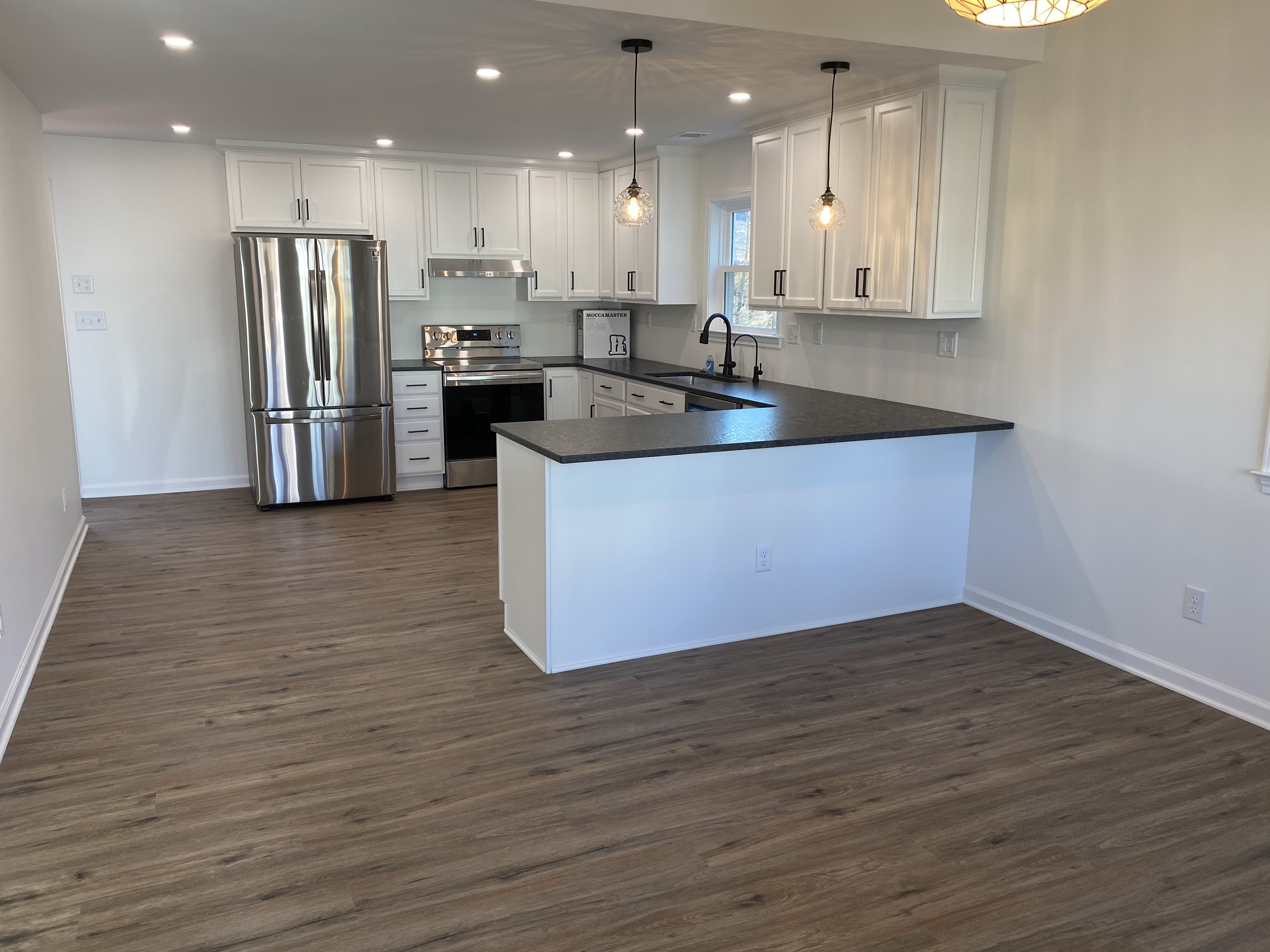
The existing roof lines were preserved so that the house would not only be less expensive, but also keep the feeling of the existing neighborhood. By keeping the original roof form in the front of the house, it enabled the living room to have a cathedral ceiling which gives the relatively small space a feeling of grandness. The relocated kitchen is open to the living room but separated by both the bar and the dramatic change in ceiling height.

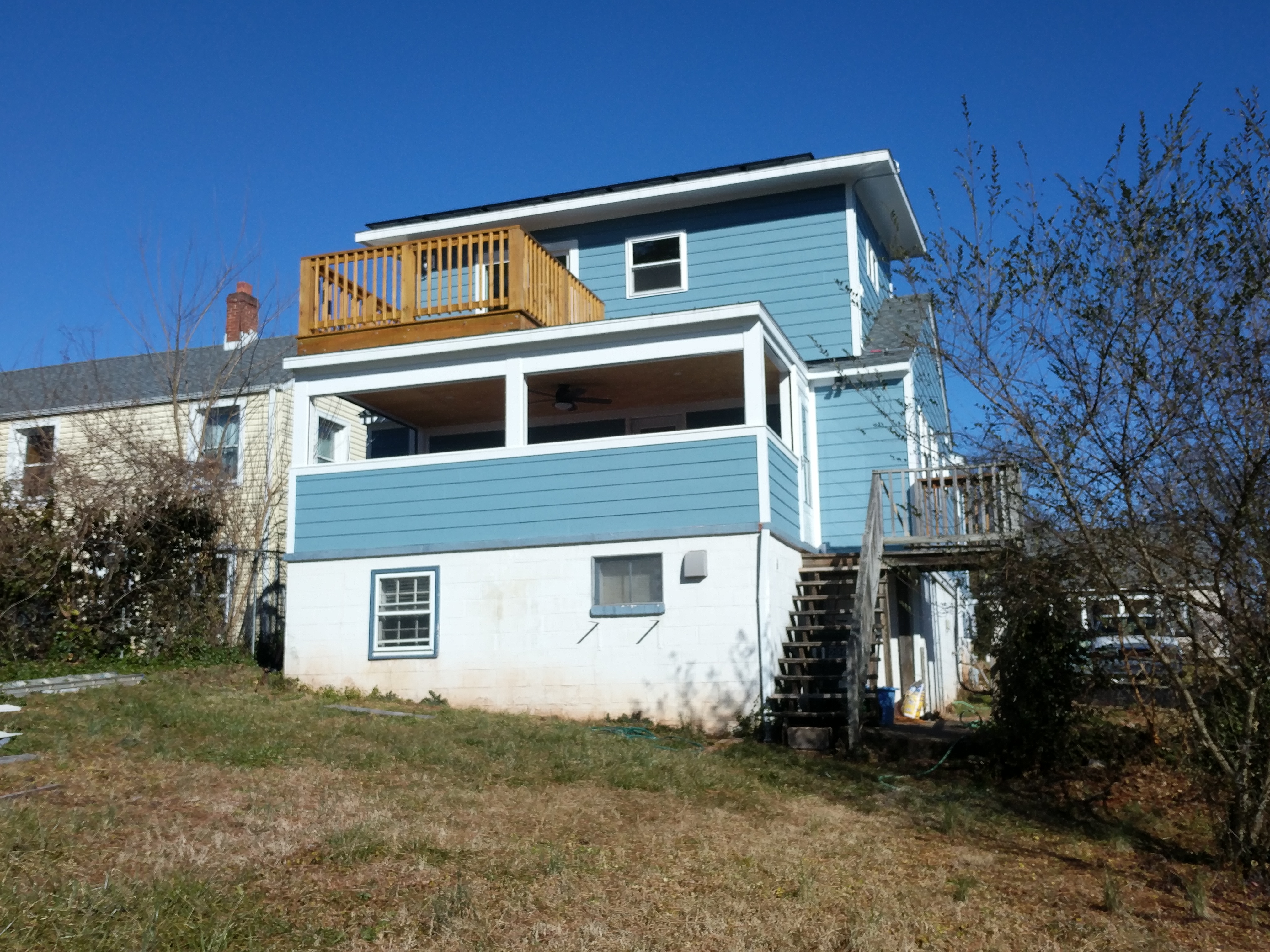
The second story lifts itself out of the back of the house just high enough for short, narrow windows to collect northern light with a shed roof sloping almost directly south and covered in solar panels. The second floor is filled with the main bedroom and bathroom walking out to a deck. Under the deck is a three-season porch located adjacent to the kitchen: ideal for sheltered outdoor dining that soaks in the view.
The windows, siding, roofing, and insulation are all new. Air sealing was also completed on the main floor and second floor but was not on the mostly unoccupied basement. An inverter driven heat pump was installed for heating and cooling so that no backup heating is needed. The two showers and the water heater are in a stack which makes the pipes very compact so that hot water gets to the showers quickly, saving water and energy. Even with many visitors and the original electric resistance water heater the solar panels have still generated more energy than the house has used in its first two years. After an incredible amount of work, the house looks fresh and new again and performs just as well.




 The Housing Lab