Let’s redesign our buildings to live within our planet’s limits!
I am excited to be speaking at PhiusCon 2023, being held this Nov. 9-10, in Houston, Texas! Join me at the industry-leading passive building event:


Let’s redesign our buildings to live within our planet’s limits!
I am excited to be speaking at PhiusCon 2023, being held this Nov. 9-10, in Houston, Texas! Join me at the industry-leading passive building event:
Have you ever wondered how different conditioning, ventilation, dehumidification and domestic hot water systems stack up to each other in energy usage and carbon impacts? I hosted a webinar on Passive House Accelerator analyzing just those questions for a real passive house apartment building in Pittsburgh. Check it out if you want to expand and refine your HVAC mental models! In total, 14 different HVAC/hot water system types are discussed; they were all modelled and analyzed for their embodied carbon, operational carbon, and refrigerant leak impacts.

I’m thrilled to be presenting about Radical Decarbonization with Michael Hindle from Passive to Positive at PhiusCon 2022 in Chicago! Pre-Conference starts Oct. 25, so secure your ticket now.
Register here: https://www.phius.org/phiuscon/register-phiuscon-2022
#phiuscon2022 #phiuscon #passivebuilding #passivehouse #passivehouseconference #netzero #sustainability #chicagoconference

 The Charlottesville Climate Collaborative empowers individuals and businesses to be climate leaders with strategies to take action. This presentation will provide practical solutions to help you make a positive impact and achieve sustainability goals in your lifestyle, business, and community.
Speakers:
Andrea Bostrom
Andrea is the Charlottesville Climate Collaborative’s Residential Program Manager. Andrea began her journey into advocacy as a high school student in the Deep South, holding the enviable title of President of the Students for Environmental Awareness club. A native of Alabama, she grew up eating home grown tomatoes, communing with horses, and riding her bike through peach orchards. She took her passion for the environment towards a Bachelor’s degree in Environmental Engineering from Louisiana State University and a Master’s Degree in Civil and Environmental Engineering from the University of Texas – Austin. Andrea has spent almost two decades as an engineer, policy maker, and program manager in both the public and private sectors. She served as the program manager for the flood protection program at the City of Austin’s Watershed Protection Department for seven years before relocating to Charlottesville in 2014. She served as Director of the Charlottesville Waldorf School before joining C3 in September 2019.
Claire Habel
Claire Habel, C3’s Commercial Program Manager, grew up in Minnesota exploring the natural world. At C3’ she is running the Better Business Challenge as well as our Green Schools network. She graduated from DePaul University cum laude with a Bachelors in Intercultural Communication and earned her master’s degree in Environmental Communications & Advocacy from James Madison University. Most recently Claire worked with the City of Charlottesville’s Environmental Sustainability Division and Office of Communications. Claire is passionate about engaging businesses to promote sustainable practices.
Lunch will be provided
Fee: $10 for members and $20 for nonmembers.
Lunch will be served, Register Here
Our meeting space is generously donated by the City of Charlottesville.
 Tour the first Passive House in Virginia with the General Contractor and Owner as they explain the intentions going into the project and lessons learned. Lankford Passive House has three bedrooms, two-and-a-half bathrooms, and about 2,250 square feet.
The green home has triple-pane Serious Windows 725 Series, double-stud wall framing, FSC-certified framing lumber and plywood, structural insulated sheathing with taped seams, a hybrid wall with nine inches of Agribalance open cell spray foam and cellulose insulation, a roof with Agribalance open cell spray foam and two inches of closed cell roof foam, a white roof, and an exterior with stucco and Western Red Cedar.
The home includes several other green elements, including a 1,100-gallon rainwater harvesting system, locally-sourced slate, regionally-sourced red oak floors with a water-based low-VOC finish, and building finishes from cherry and locust trees harvested on the site.
Fee: $5 for members and $15 for nonmembers.
C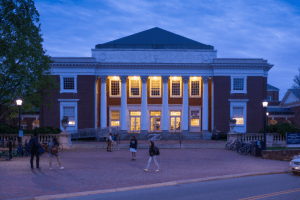 lark Hall is a mixed-use academic building that opened in 1932 to house the UVA School of Law, and currently houses the University’s Department of Environmental Sciences and Charles L. Brown Science & Engineering Library. It is home to classrooms, office space, a library, a café, laboratories, exhibits, lecture halls and a “wet lab.” Recently, the UVA Facilities Management energy conservation team (Delta Force) implemented a combination of energy and water conservation upgrades, converting all 5,000 interior and exterior fixtures from fluorescent lamps to LED, installing low-flow toilets and faucet aerators, recalibrating air handling units, and upgrading HVAC controls. As a result, Clark Hall achieved an annual energy savings of $750,000, or 65%, along with an annual water savings of $22,000, or 79%, relative to their pre-retrofit baseline. The Delta Force team also documented the sustainable operations of Clark Hall, and the U.S. Green Building Council awarded Clark Hall its “LEED V4 Existing Buildings, Operations + Maintenance Silver” certification, the first such project recognized in Virginia
Speakers and Tour Guides:
Doug Livingston – Doug is part of the energy engineering team and helps identify and implement energy efficiency and retro-commissioning projects across Grounds. He also works with various stakeholders on Grounds to improve the built environment in order to increase health and wellness for the UVA community. Prior to joining UVA, Doug was the Program Manager of the Green Building Services department at Harvard University. Previous to Harvard he worked as a consultant doing HVAC and plumbing design, energy modeling, and energy conservation. He has a Bachelor of Science and Master of Science in architectural engineering from the University of Nebraska and he is a licensed mechanical engineer in the state of California.
Jesse Warren – Jesse is responsible for the University’s electric demand response and sustainable building programs. He leads a team of energy engineers who identify and implement energy efficiency and Delta Force retro-commissioning projects across Grounds. Previously, Jesse worked as a consultant doing energy conservation, HVAC design, energy modeling, and LEED project coordination. He has a Bachelor of Science in mechanical engineering from Virginia Tech and he is a licensed mechanical engineer in the state of Virginia. He is a proud father of three and a rain or shine two-wheeled commuter.
John Jones – John joined UVA in October 2010 after holding previous roles in the areas of facilities project management, physical plant operations, and mechanical and building automation systems contracting with various Virginia-based firms. He is currently responsible for evaluating, identifying and implementing energy reduction projects in existing university facilities at UVA. A few of his projects have included Gilmer Hall, Thornton Hall, West Complex and others. John holds a Bachelor of Science in engineering from Old Dominion University and is a licensed engineer in Virginia. He is also an accredited LEED AP BD+C and O+M as well as a Certified Energy Manager. Outside of work, John enjoys outdoor activities and music.
Fee: $5 for members and $15 for nonmembers.
 ENERGY STAR is the premier program for recognizing energy efficient commercial buildings, and LEED is the premier program for recognizing sustainable green buildings. This session will provide valuable information to LEED practitioners to help them leverage ENERGY STAR as a means of moving buildings toward LEED certification. The program will present an overview of the ENERGY STAR program for commercial buildings, with a special focus on the program’s widely used Portfolio Manager software tool that allows building owners and managers to track and assess the energy performance of their buildings. Participants will then learn about how ENERGY STAR intersects with LEED EB: O&M, and how increasing performance through ENERGY STAR can help buildings achieve LEED certification, as well as how the relationship between ENERGY STAR and LEED may change under the proposed LEED v4.1 system. Finally, participants will be introduced to a host of other ENERGY STAR tools, resources, and initiatives that are aimed at helping to improve the energy performance of buildings, as well as opportunities to reduce water use and waste generation.
Speaker:
Jerry Lawson, National Manager, ENERGY STAR Small Business/Congregations, U.S. Environmental Protection Agency
Fee: $10 for members and $20 for nonmembers.
Lunch will be served, Register Here
Our meeting space is generously donated by the City of Charlottesville.
 In case you missed it, we can now create new buildings that are so efficient that they can create most of the power they need onsite and it can be done at a very small or even no premium to standard buildings.
There are a few big challenges to widespread adoption:
1. We need to take Bold action.
2. Everyone involved needs to buy into the idea (Owners, builders, designers)
3. We need Simple, elegant, low cost tools to use to guide the infinite possibilities of a building design in the right direction. The Zero code is a straightforward set of code style rules that gets a new building on the path to zero-net-carbon without having to pay for a plaque.
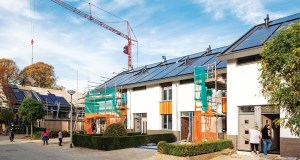 The Dutch EnergieSprong program retrofits existing multi-family housing stock to Net-Zero energy quickly and cost-effectively. The state of New York (through RetrofitNY), and the Department of Energy (through the REALIZE project) have funded several programs to transfer the EnergieSprong approach to the US. Staengl Engineering is working on a project in New York and with the REALIZE project to help implement a similar process for US multi-family buildings. This talk with describe EnergieSprong and report on efforts to implement the approach in the US.
Learning Objectives
Presenter:
Galen Staengl has 20 years of experience designing cutting-edge energy-efficient mechanical systems for green building projects and industrial facilities. Throughout his career, Galen has worked to bring energy-efficient and sustainable principles into his designs for award-winning schools, institutional buildings, multi-family residential projects, and office buildings. As President of Staengl Engineering, Galen has provided design and energy analysis for buildings certified as LEED Platinum and Gold, Passive House, Net Zero energy, Net Positive energy, and Living Building Challenge.
As a leader in low-energy building system design, Galen regularly presents and moderates at national and regional green building conferences. He is also involved in advancing the technical and regulatory aspects of green building design in the U.S.; he is currently a member of the national Technical Committee of Passive House Institute U.S..
Fee: $10 for members and $20 for nonmembers.
Lunch will be served, Register Here
Our meeting space is generously donated by the City of Charlottesville.
 Large multifamily buildings in mixed humid climates present unique challenges and opportunities for energy efficient design. Dominance of internal gains from plug loads, lighting, appliance density, and base building loads create energy balance profiles where heat gains are a serious issue and solar gains must be carefully controlled. Come learn about the PHIUS+ Passive Building standard and how this approach optimizes design of this building type to minimize cooling demand and energy use, delivering buildings with superior comfort, air quality and durability. Case studies of several multifamily projects transplanted to C’ville and optimized for this climate will be included.
This month’s presenter is Prudence Ferreira; a founding partner and Managing Director of Passiv Science LLC. Ms. Ferreira is a licensed instructor for the Passive House Institute US and regularly teaches the Certified Passive House Consultant (CPHC) training, WUFI Passive modeling, and Advanced Hygrothermal Analysis around the US. Prudence has served on the PHIUS Board of Directors since 2011 and is a founding member of the PHIUS Technical Committee. She has consulted on passive building projects across 7 different climate zones including sub-arctic, tropical and high altitude locations.
Free for members and $10 for nonmembers. Lunch will be served.
Where:
City Space
100 5th Street, NE, Downtown Mall, Charlottesville, VA
 The Housing Lab