Posts Tagged With: Neighborhood

“Birdland” The Village

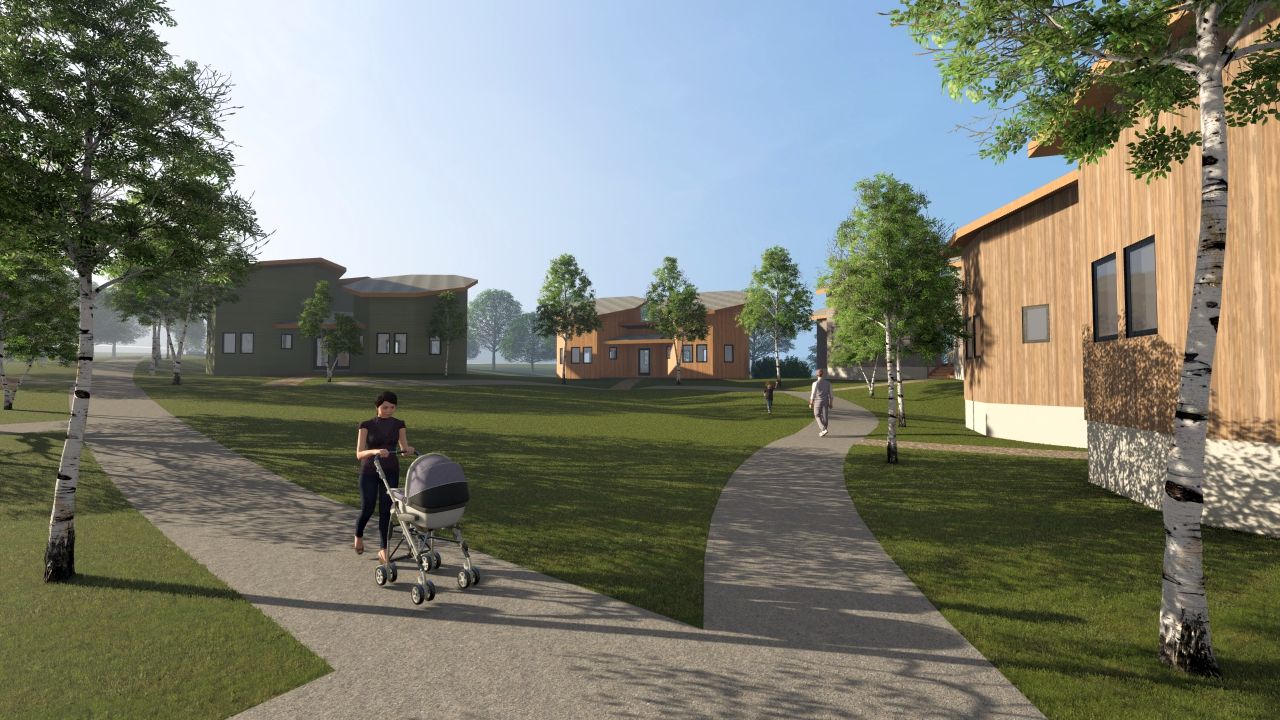
We can begin to tackle both the housing and loneliness crisis when clever, compact, kit housing design and clever site planning work together to create a neighborhood that feels like a village.


An Octagonal Housing Solution
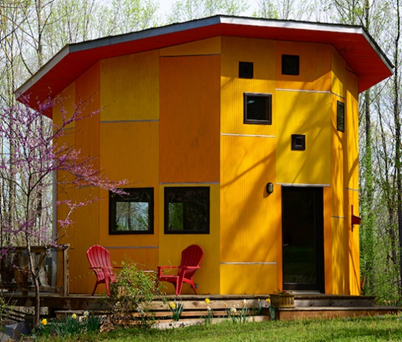
The team at Sculptorhouse believes it is possible to create housing that can provide this for many of the people that currently do not have access to such a home.  Sculptorhouse creates affordable housing that looks and feels like luxury housing.

They have designed, engineered, and prototyped a low-cost, eco-friendly house kit –The Octagonal Living Unit (OLU), to creatively address the many aspects of the housing crisis. The design for the OLU draws on the founder’s thirty-year career as a sculptor to create something unique and visually appealing but also beautifully proportioned and spacious. By creating the house in the same way a sculptor creates art multiples (like Rodin’s The Thinker that is modeled once and cast in bronze many times) Sculptorhouse is able to significantly reduce the per-unit cost. The octagonal shape increases efficiency in floor space, heating and cooling, and resistance to wind and seismic events. The result is a house of high quality and high visual appeal but at an affordable cost.

An octagon encloses twenty percent more floor space with the same materials as a rectangle. It is more efficient to heat and cool and more resistant to wind and seismic events. The interior space of an OLU is an open-plan space, giving long sight lines across the space and a breathtaking 16-foot-high cathedral space in the living room. The Sculptorhouse octagon is light filled from all points of the compass, allowing the sun to light it up with a glow in the early morning to the late afternoon.

This powerhouse little dwelling is built from an innovative building system that uses materials – galvanized steel and expanded polystyrene – that cannot be destroyed by water, will not rot, has no nutritional value for any vermin, and will withstand extremely high winds and severe earthquakes. Sculptorhouse kits are made from components that are created by manufacturers already operating at high capacity: the structural insulated building panels (SIPS) come from Thermasteel and the windows and doors come from Marvin. The small amount of lumber is sourced from local building suppliers. Most homes use thousands of elements. Sculptorhouse kit homes are built with SIPS panels that serve as structure, insulation, sheathing, and vapor barrier on one piece so they use about two hundred parts, creating significant savings in labor costs and time at the job site. When situated on permanent foundations and framed from steel, they are more resistant to wind and seismic activity than conventional homes.


A Pocket Village Solution
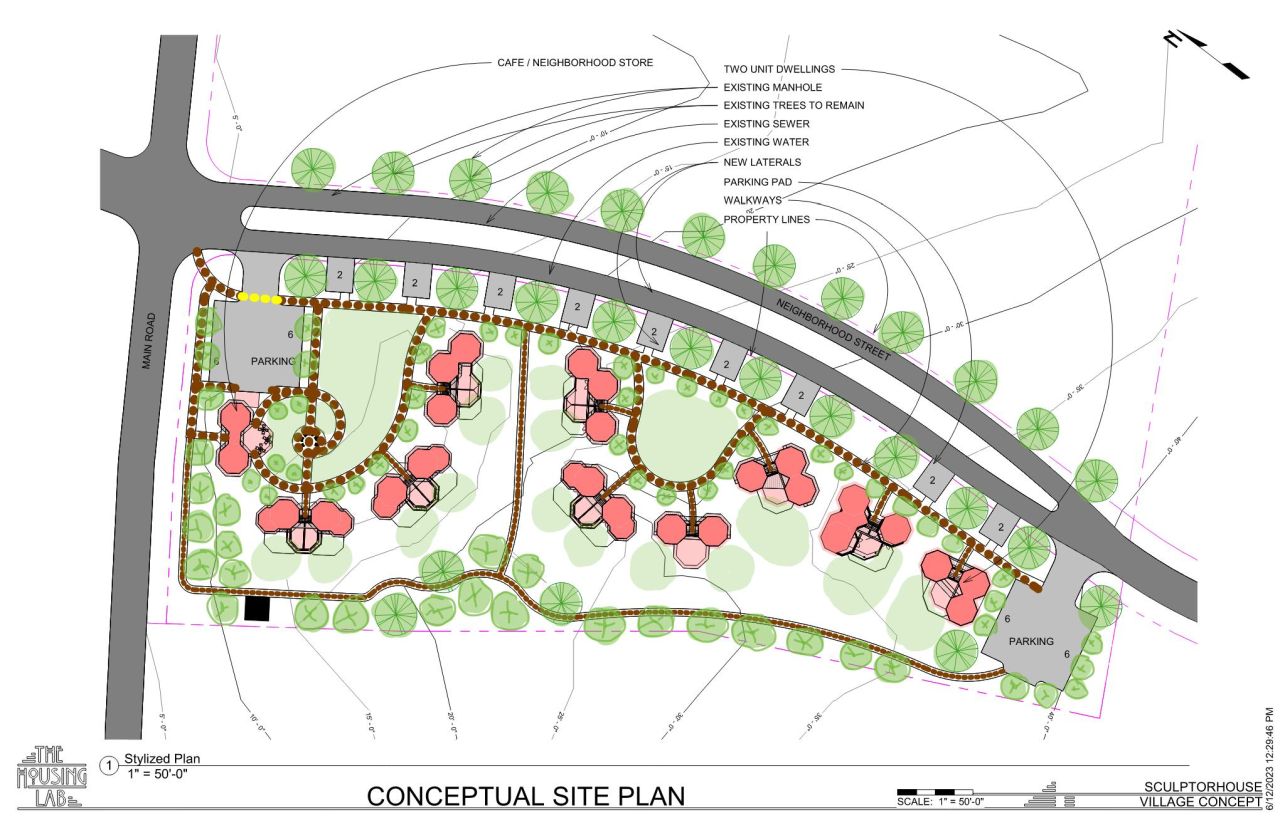
The site studied by The Housing Lab is located within a bikeable mile of downtown with water, sewer, and electric next door. It is a previously cleared infill site situated between a suburban neighborhood that is populated with mid-century ranches and a fairly dense development of townhouses. The design that will integrate best with the neighborhood is something that is a bridge between the townhouses and the single-family houses. The plan uses two-story versions of the Octagonal Living Unit connected in various ways to create two family dwellings in a variety of configurations.

  The concept for the site plan is unique in a few subtle but powerful ways:

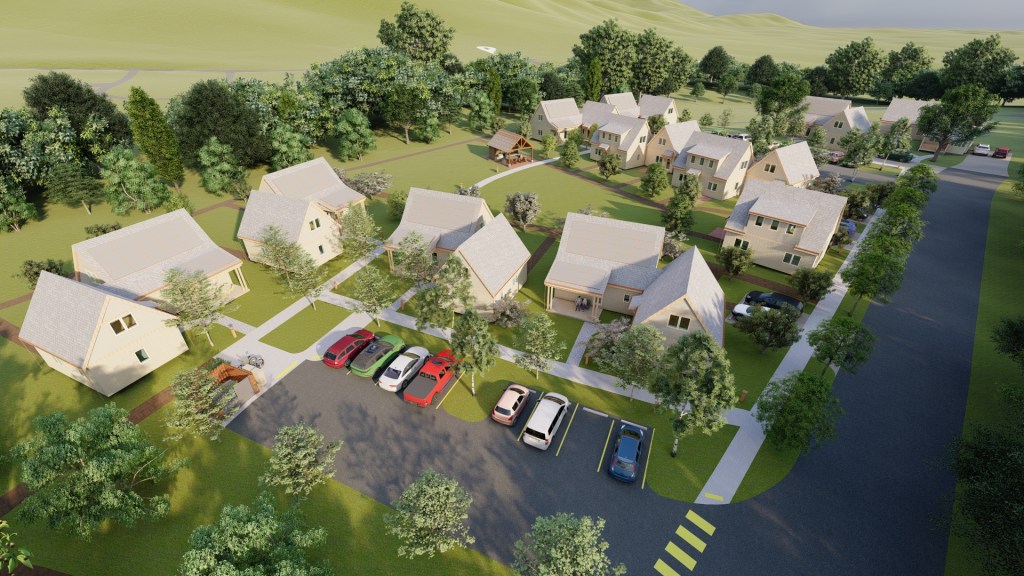
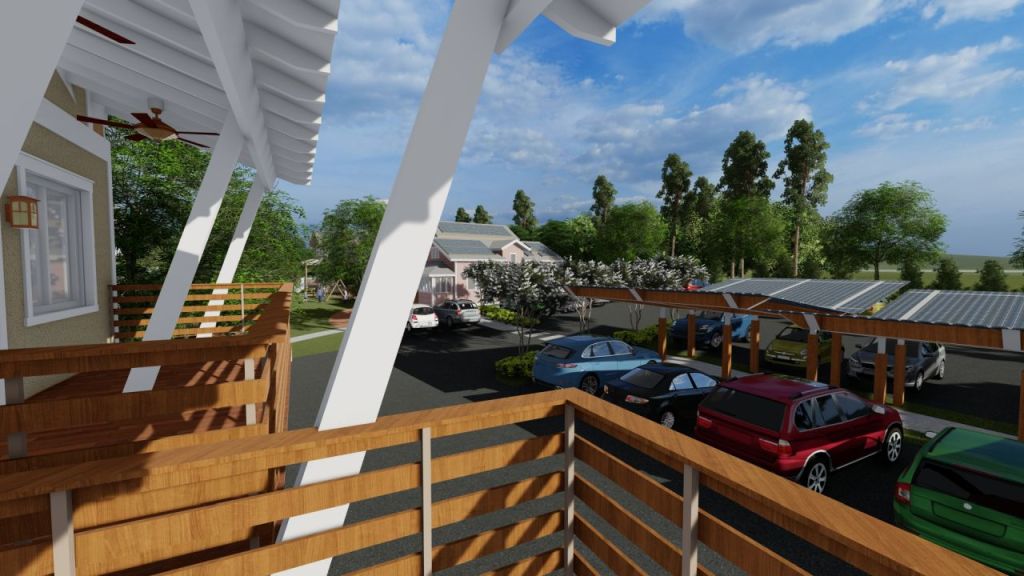
  1. The parking is pushed to the edges of the site which not only costs less by building less impermeable driveway surface, but also opens the interior of the site for more shared greenspace.
  • The structure on the corner of the main road and next to the parking area is intended to be a neighborhood cafe or general store, creating a third place to walk to for the surrounding neighborhoods and bringing life to the corner.
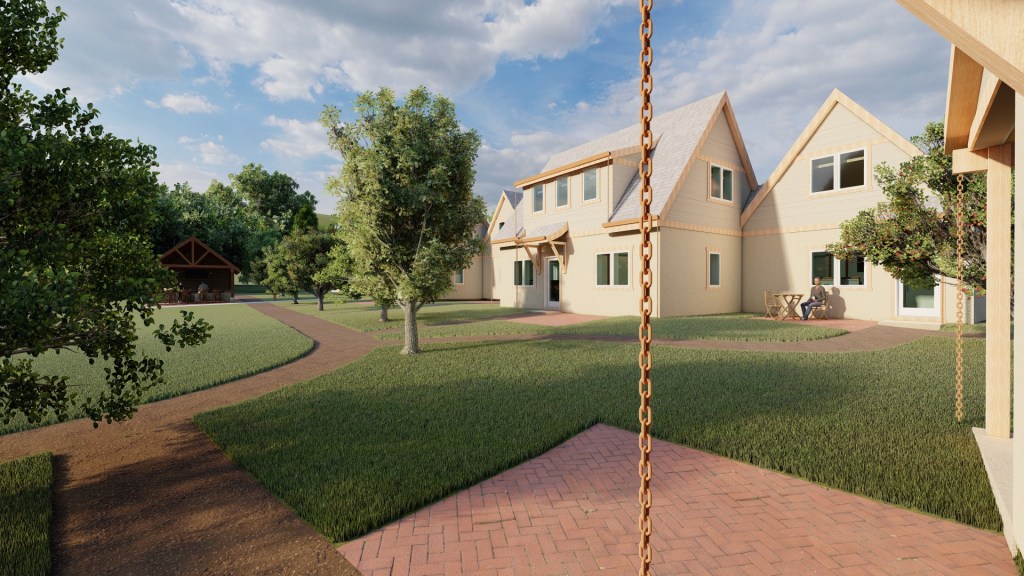
  • The houses are arranged to create two public greenspace “rooms” that lead to most of the main entrances, encouraging spontaneous conversations for adults and playdates for children.
  • Even though the houses are attached as two-family dwellings, the unique angles of the Sculptorhouse units and the way they are attached create a private back yard for all the houses.
  • As a benefit for the entire community, a walking trail runs along the back of the site
  • The concept is flexible enough to be applied to the many different shapes and topography of infill sites, like this second site just around the corner from the first site studied. Its location doesn’t make a commercial space viable, but all the other patterns fit nicely. This site design preserves its seasonal stream buffer and wooded areas by focusing the neighborhood only on the previously cleared areas next to the existing roads and services.

Contact The Housing Lab or Sculptorhouse if you would like more information or are interested in bringing this kind of concept to life!
Categories: Uncategorized | Tags: , , , , , | Leave a comment

Mcallister Village: Walkable, Adorable, Affordable

The Mcallister Village concept is to create a neighborhood of small starter homes a short walk from coffee shops, restaurants and the future downtown Crozet. The site is designed to push the parking to the outside, create courtyard entries to all the houses, open up a shared central green with a shared pavilion, and be enhanced with perimeter walking trails. This idea was inspired by The Boiceville Cottages in Brooktondale, NY not far from Ithaca, NY

The houses will be compact one bedrooms with lofts attached to compact lofted two bedroom or three bedroom houses. The one bedroom houses fit somewhere in-between apartments and single family detached houses in the market; a segment largely ignored for decades due to outdated zoning codes. The houses utilize a versatile lofted design to provide more storage and living area for singles, couples and young families. The construction details are simple and elegant; reducing cost, increasing thermal efficiency and maximizing space.

The proposal asks to either fix the blatant mathematical errors in the R-2 zoning code or rezone the property to PRD (Planned Residential Development) from R-2 to allow for our creative redesign. The total amount of families would be the same as by-right, but the by-right attached accessory units (adus) would be expressed as more desirable attached one bedroom cottages that can be bought or rented separately:

This project is currently shelved unless a forward thinking developer wants to take on securing the property and going through the county rezoning process. Contact us for more information

Categories: Architecture, Communities, Design, New Urbanism, Preservation, Tiny Housing | Tags: , , , , , , , | Leave a comment

999 Rio: Mixed Use Pocket Neighborhood

This interesting little mixed use project is located on a busy arterial road on one edge and a much quieter neighborhood street on another. The plan is to build a small office building along the arterial road with a residential pocket neighborhood along the neighborhood street. More information on the project can be found here.

Shimp Engineering came up with the site design for the developer, Gallifrey Enterprises. We were tapped to help the surrounding neighbors and local leaders get a better understanding of how the project would feel on the corner. We built a really quick set of renderings, designed an inexpensive but attractive office building, and were able to provide design feedback from the visualization. With the renderings in hand, the project received approval from the County in 2020.

The parking requirements for the site are quite large, causing it to take up a lot of the site. The affects of this amount of parking were toned down by tucking the parking behind the buildings and providing as many trees on the site as possible

The pocket neighborhood features a dozen houses around a shared greenspace which is hoping to attract life with its shared pavilion for outdoor gatherings and kids playground. The parking is in the remote parking areas so that the greenspace stays free of automobiles.

Categories: Architecture, Communities, Design, New Urbanism | Tags: , , , , , , | Leave a comment

Bamboo Grove Approved!

Bamboo grove was approved last week by the Albemarle Board of Supervisors, which means that the project is moving forward. We get to build a little pocket neighborhood in walking distance to downtown Crozet!

Thank you so much to Nicole and Justin from Gallifrey who filled in the gaps of my development  knowledge to make the rezoning process as smooth as it can be. County staff and officials have all been great to work with; I’m proud of how much care they put into their complex job of city building.

Special thanks to everyone who offered encouragement and advice through all of the project’s many different iterations, especially our wonderful neighbors. I’ve received so much positive feedback on the designs from the community and neighbors; I hope that this project becomes a beacon for how to create small scale, affordable, community focused, walkable places to live that fit in with and strengthen the surrounding neighborhoods.

Part of my philosophy is to make it easier for this type of neighborhood to be built in the area, so please feel free to contact me about questions, ideas or dream projects. Here is the slide deck from the Board of Supervisor’s meeting

Categories: Announcements, Architecture, Communities, Design, New Urbanism | Tags: , , , , | Leave a comment

Bamboo Grove Crozet Neighborhood Meeting

Thank you so much to everyone who came to the first neighborhood meeting on February 12th for our little Bamboo Grove pocket neighborhood! Your encouragement and great questions made it an educational and fun experience. I wish that we had more time to talk, but as always if you have any other questions or comments please contact us.

Here are the presentation slides that framed our discussion:

CCAC Presentation Slides

Categories: Announcements, Architecture, Communities, Design, Education, Energy Efficiency, New Urbanism | Tags: , , , , , , , , , | Leave a comment

Bamboo Grove Pocket Neighborhood

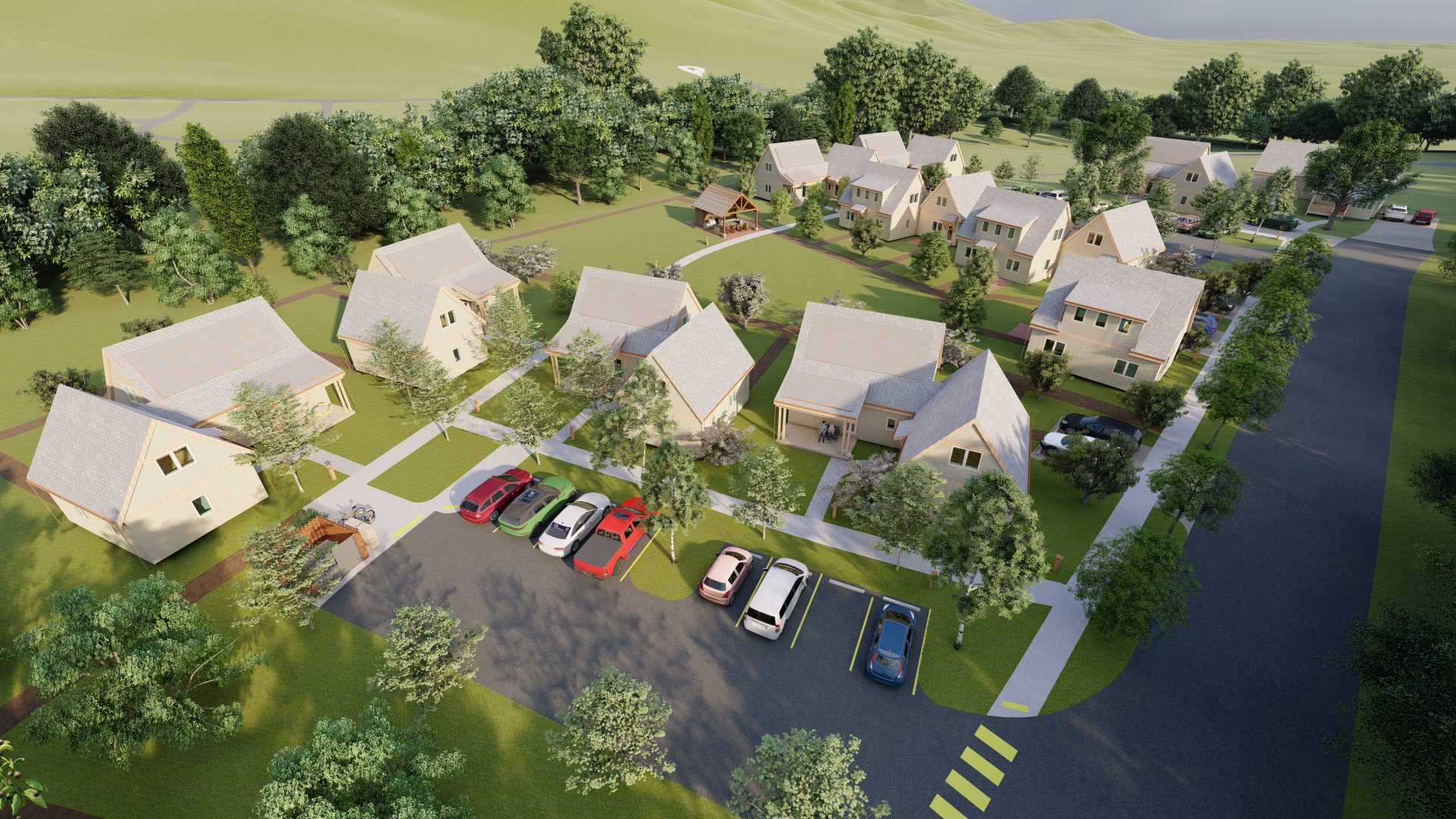
Bamboo Grove is a miniature neighborhood with six compact, affordable and energy efficient houses is designed for an acre of land a few blocks from downtown Crozet. Shared green space between the houses anchors the neighboorhood together while walking trails and sidewalks connect it to nature and the surrounding community. Common landscaped areas, patio, bicycle parking and mail area will be located between the vehicles and the houses to encourage the informal interaction so essential to build a feeling of belonging to a community.

This type of housing is often referred to as a “Cottage Court”, “Bungalow Court”, or “Pocket Neighborhood” and provides a housing choice that is desirable, affordable and very rare in the current housing stock. All the houses will have a compact design which will help them fit in well with the surrounding neighborhood and will make them more affordable than almost every new house being constructed in the surrounding Crozet area.
The area next to the stream running through the property will be dedicated for Public use as a part of the proposed future greenway trail system that is shown in the Crozet Master Plan.

Rain gardens, native surface landscaping and other green infrastructure techniques will be used as much as possible to manage stormwater from hard surfaces on the site and from the areas draining through it. The site lies next to a small stream, so careful design will be used to filter and slow down the water travelling through the site as much as possible with tools that work with the existing environmental features. The existing topography will be respected and used to enhance the character of the neighborhood. For more details go to the project page:

Charlottesville Tomorrow did a little article on our little project!

Categories: Announcements, Architecture, Communities, Design, New Urbanism | Tags: , , , , , | Leave a comment

Prairie Queen Missing Middle Neighborhood

Reintroducing the 4 and 6 unit apartment building and placing them in a new neighborhood is a great concept for building housing with the character of lovely turn of the century streetcar neighborhoods with the realities of the modern mega-financing world.

This is a great model to create vibrant, community fostering, walkable places instead of soulless apartment buildings. Thoughtful design goes a really long way.

Categories: Architecture, Communities, New Urbanism | Tags: , , , , | Leave a comment

Putting a friendly face on Gentle Density

Attached housing is a really smart way to increase density and provide affordable, small housing in walkable neighborhoods, but it is illegal in most places. Duplexes don’t have to be ugly! This is a gallery of lovely examples where attached housing not only fit well into an existing neighborhood, but is also really attractive. Help normalize and re-legalize missing middle housing by adding your pictures to and sharing galleries like these!

Put a Friendly Face on Gentle Density

Categories: Architecture, Design, New Urbanism, Tiny Housing | Tags: , , , , , | Leave a comment

Required Reading: Walkable City

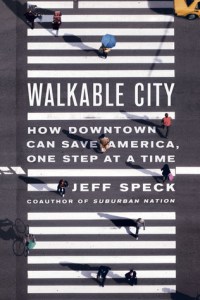
Written in an entertaining style, Jeff Speck’s Walkable City brings urban planning concepts to a place that anyone can understand. This book takes the concepts of Jane Jacobs’ The Death and Life of Great American Cities and draws upon loads of independent research to show how street design directly affects a place. You don’t have to be a designer to understand this book, which makes it a great introduction to the way that your city works (or doesn’t) for citizens and planners alike. Everyone should feel like their city gets better every day, and this books gives you the tools to understand some of the interconnected concepts of making a livable and vibrant city or town.

Categories: Architecture, Communities, Design, New Urbanism | Tags: , , | Leave a comment

The Twelve Steps of Sprawl Recovery

As we strive to build towns and neighborhoods that are vibrant, lively and great places to live, we inevitably find that people being there are what makes them this way. It is not architectural acrobatics or parking lots that make great places, but interesting street life. Hopefully the paradigm of building everything so far apart from each other, which in turn creates personal automobile dependence, is drawing to a close. The question then is how do we re-imagine areas that were built with this thinking into vibrant and essential places?

Steve Mouzon has a fantastic post outlining The Twelve Steps of Sprawl Recovery. It is a simple and incremental approach to making places vital again.

If you are thirsty for more people-focused town design, The Congress for New Urbanism is a collection of people that have made it their mission to answer these sorts of questions; inspiring towns, cities and their inhabitants to work towards making their places better every day.

Categories: Architecture, Communities, Design, Resilience | Tags: , , , , | Leave a comment

Blog at WordPress.com.