Join us at the James River Green Building Council luncheon on Tuesday, July 9th 12:00 — 1:00pm to learn about ways to think more about the total environmental impact of products!


Join us at the James River Green Building Council luncheon on Tuesday, July 9th 12:00 — 1:00pm to learn about ways to think more about the total environmental impact of products!
In the quest for more sustainable and healthier materials for renovating my own home, I have stumbled upon this gem: Eco-bond Adhesives: Zero-VOC adhesive/sealant/caulk.
Caulk and adhesives are usually chock full of nasty, toxic ingredients that smell terrible and make you light headed while appling them, which is only the beginning of the trouble. The off-gassing can take weeks to get to a point where it isn’t noticable by your nose, but how long will it take for the caulk/glue/sealant to finally be benevolent? Possibly never. I haven’t done scientific testing pitting eco-bond against its gassy competitors in areas like longevity, elasticity, or water tightness. I have used both in my home and it performs the same or better than the conventional alternatives. Support companies who do the right thing instead of the cheapest/dirtiest thing and you’ll have a healthier home at the same time!

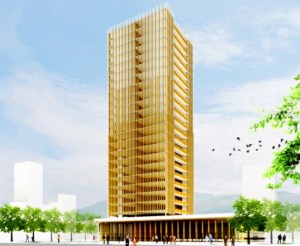
Have you ever wondered why skyscrapers sway back and forth in the wind yet are made of steel and concrete? You aren’t alone. Several people are taking the idea very seriously, most notably Micheal Green, who wrote an open source guide for us about how it can be done!
Join us tomorrow night, June 12, 7:30 PM, at BLACK MARKET MOTO SALOON in charlottesville to hear all about the science of rain forests, part of Science Strait Up.
Description from Science Strait Up: “How are tropical forests and climate change linked? U.Va. Environmental Sciences professor Deborah Lawrence discusses the long history of forest clearing and how it has affected the earth’s atmosphere over the past 8,000 years. Forests are important for taking up carbon, but growth and productivity limit how much they can hold. Come learn about the science behind tropical forests, carbon, and our atmosphere, and why it matters.”

Don’t forget to join us today at the James River Green Building Council luncheon on Tuesday, June 11th 12:00 — 1:00pm to learn about how to make our built environments more resilient!

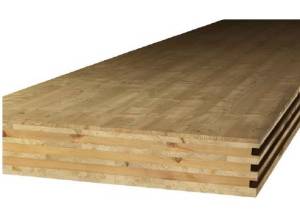
Here’s the idea, glue a bunch of small pieces of wood together from quickly growing trees and make yourself a massive chunk of wood. Make these chunks in to massive panels and design them so that they can be easily joined together in the field and super strong by alternating the direction of the grain. It sounds a lot like plywood on steroids. This may seem against the tree-hugger in you, as well as going against the first R rule: Reduce. Actually this is a green technology, here’s why:
First of all, think about the building itself. Mass in a building helps to regulate the temperature of a building, much like a battery (or more technically accurate, a capacitor) it slowly gains heat from its surroundings and slowly releases it. Plenty of people have written about this already: Greenpassivesolar.com is just one. When you have massive walls you need less insulation to have the same effect. Bingo, less fiberglass or foams off-gassing into the building. Panels also take less time to put together in the field, so you spend less time with no roof and waste less material on the jobsite.
Second, think about the environment: Trees are some of the best carbon sequester-ers (I know that’s not a word) on the planet. By building something out of wood, one effectively stores that carbon. This principal is a green one only if the trees used are fast growing (rapidly renewable) and responsibly harvested. The building must also be built to be useful for a very long time.
Architecture 2030 is a team of non-profit crusaders that want to radically transform the way that structures are built and how they interact with the environment. The 2030 Challenge is much like the EPA’s very successful CFC reduction program that let the Ozone Hole repair itself. Instead of CFCs, this challenge is to phase out the use of fossil fuels in buildings by the year 2030.
Not to leave everyone hanging wondering how to accomplish this goal; they are developing a great free resource of information on how to build carbon neutral and resilient structures and plan resilient communities which is called the 2030 Palette. The website is complete with pictures, descriptions and rules of thumb for many concepts vital to low impact built environments. Check out this fantastic tool for Architects, Engineers, Owners and people who want to learn more about how our buildings interact with the environment.

Inhabitat, Ford, and the Chicago Architecture Foundation are hosing a live webcast with leading automotive designers and architects to talk about how to make functional and comfortable rooms out of tiny spaces. It will be interesting to see how the seemingly very different worlds of cars and buildings can provide much insight to each other. The Webcast Starts Thursday, June 6th at 12:30PM CDT (1:30 PM EST)

Join us at the James River Green Building Council luncheon on Tuesday, June 11th 12:00 — 1:00pm to learn about how to make our built environments more resilient!
Just over a month ago the first of the new site plans for the Greater Stonehenge Ecovillage were released and since then the interest in the project has multiplied. A lot of great people interested in the project, the Virginia Department of Transportation and Albemarle County have given us a lot to think about and a lot of stellar ideas for how to make it better. We have tried our best to show what we’ve learned in this new site plan. If you have any ideas about how to make it even better, please share!
Located just outside the city limits of Charlottesville lies a six acre parcel of land next to the aging Stonehenge Neighborhood; its gentle south-facing slope and existing structures make it the perfect place for something quite a bit different from a typical subdivision: The Greater Stonehenge Ecovillage. Please check out the newest plan, and tell us what you think!
See the details here on The Housing Lab or The Greater Stonehenge Website


 The Housing Lab